
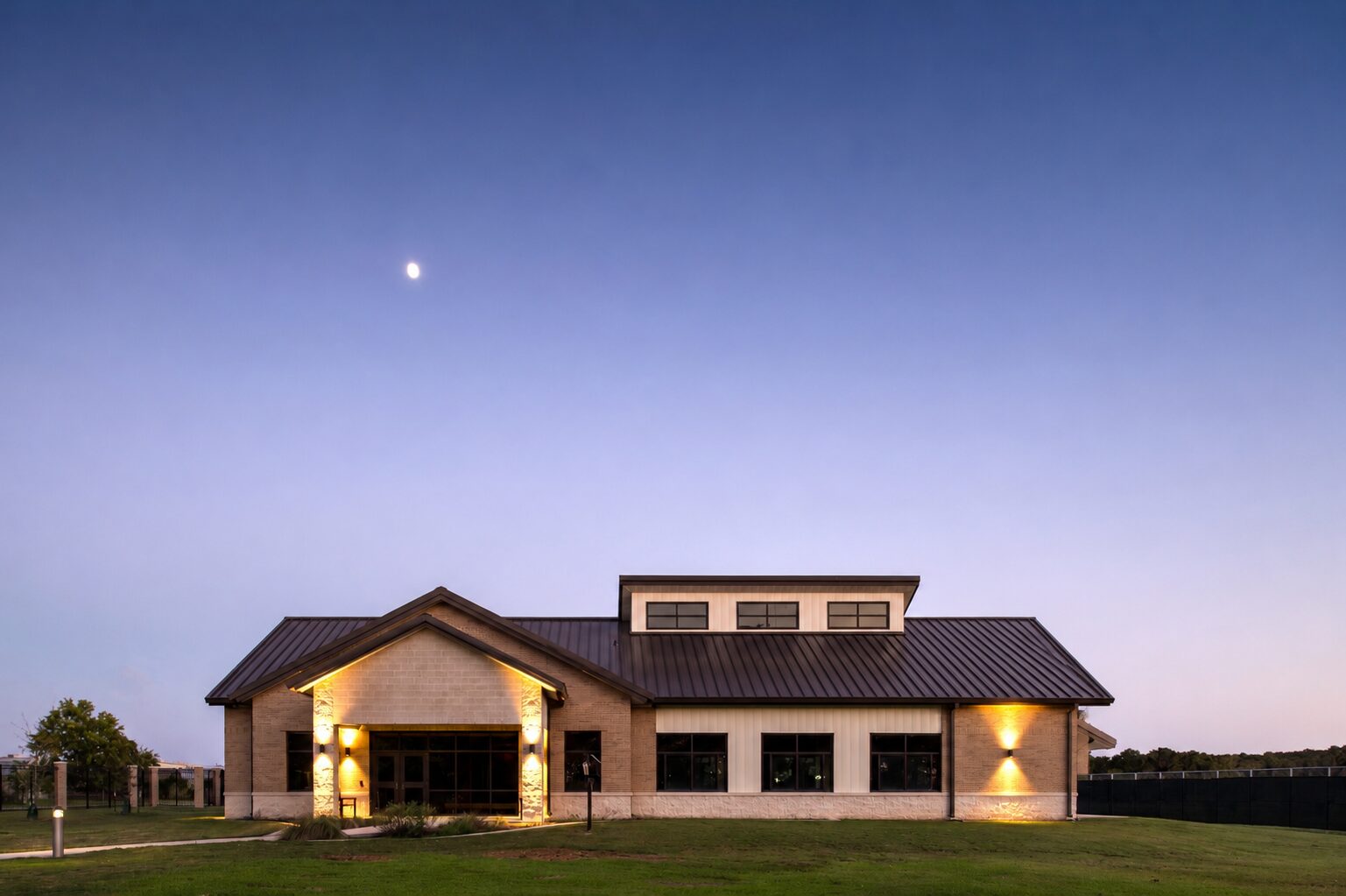
As research advances, the spaces that support it must evolve as well.
After outgrowing its existing aviary, the Texas A&M University College of Veterinary Medicine and Biomedical Sciences partnered with The Arkitex Studio to design a new facility for the Schubot Exotic Bird Health Center. The goal was to create a building that not only met the demands of a world-class avian research facility, but also prioritized animal welfare, biosecurity, and education.
More than a decade after the facility opened, our team recently returned to the Schubot Center to see how the building has served its users over time. Visiting the facility and hearing directly from those who work there every day provided valuable insight into how thoughtful design continues to support their mission.
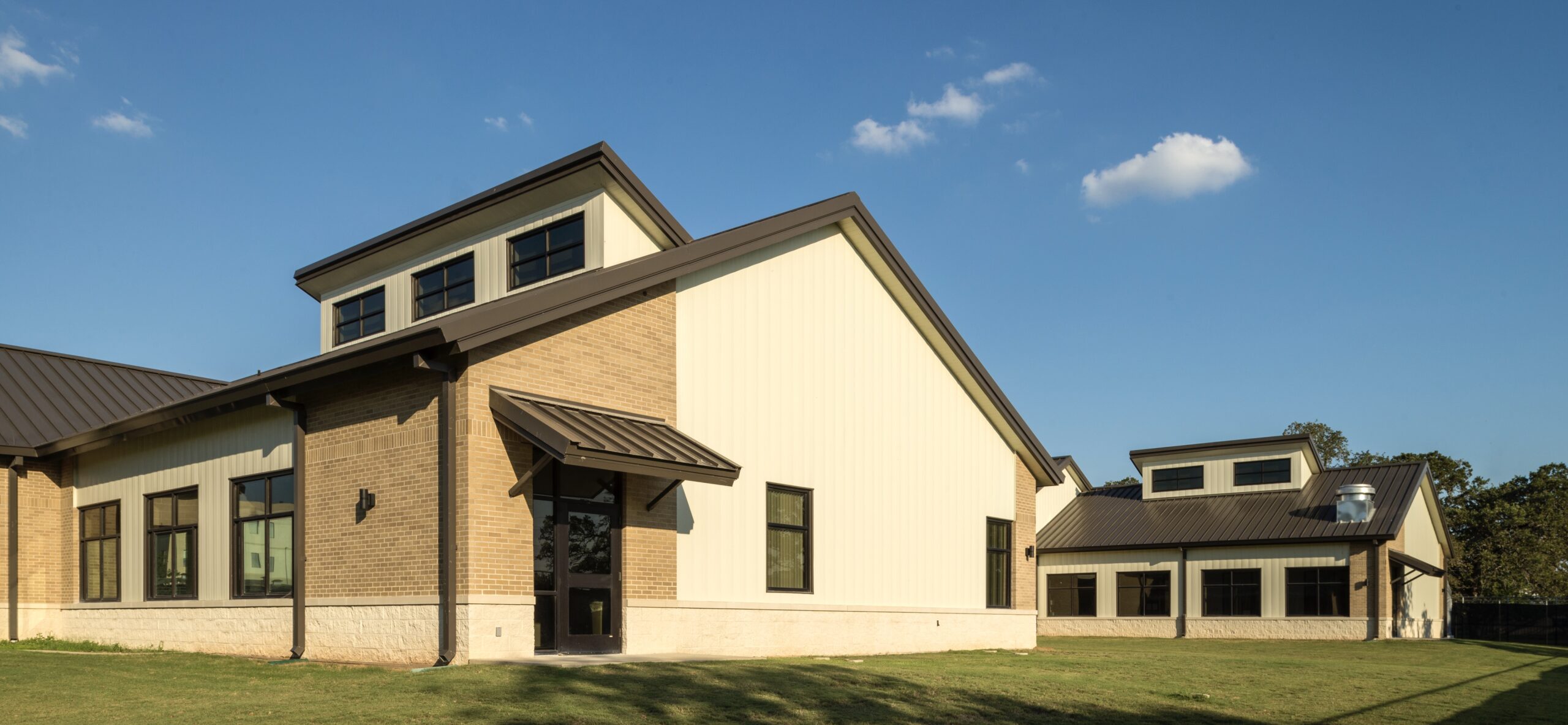
The researchers at Schubot study avian diseases and how to prevent their spread. One of the primary internal objectives of the project was preventing the spread of avian diseases within the facility. To accomplish this, the 13,900-square-foot facility was organized into separate healthy and unhealthy wings, each with isolated ventilation systems that minimize the risk of cross-contamination. The building also includes a Level 2 Biosafety (BSL-2) Laboratory, dedicated quarantine and sick ward spaces, and infrastructure that allows for future expansion as research needs continue to grow.
Creating a healthy environment for the birds was equally important. The three aviaries were designed around natural ventilation principles, allowing them to remain open-air for much of the year. Artificial heating and cooling are only needed during periods of extreme weather or when an unhealthy flock requires complete isolation. Combined with abundant natural daylight throughout the aviary spaces, these design decisions help create an environment that supports the health and well-being of the birds.
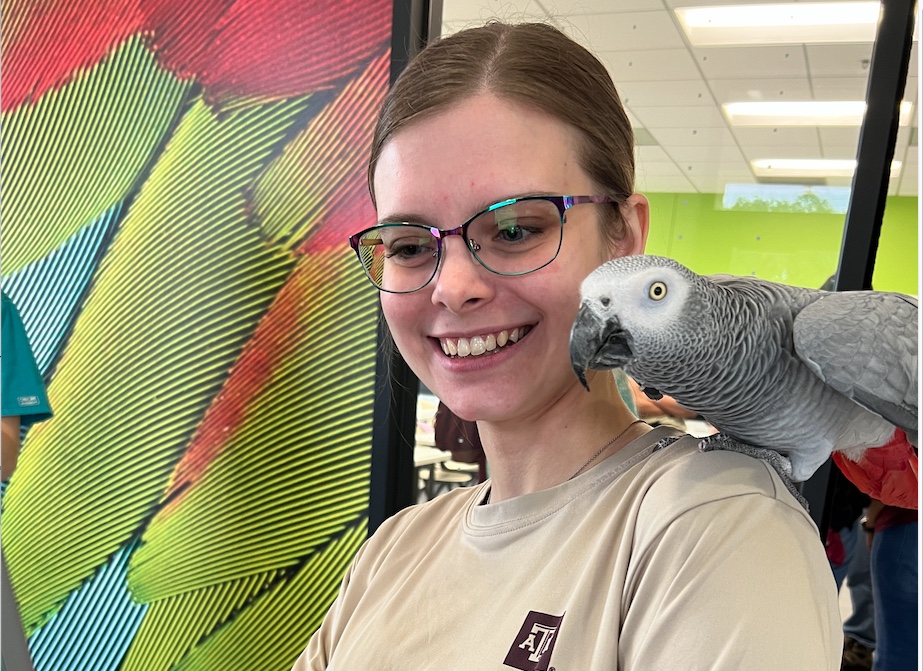
The project also advances the Schubot Center for Avian Health’s educational mission. A large, flexible classroom supports a variety of uses, including research activities, veterinary classes, educational visits from other organizations, and even a celebration of life. By integrating research, education, and animal care into a single facility, the building supports the collaborative work taking place within its walls.
During our recent visit, we also had the opportunity to learn what has worked particularly well and where future improvements could be made. Research Associate and Aviary Manager Debra Turner shared that the building has been a tremendous asset to the organization, highlighting features such as the flexible teaching space, generous storage areas, and the ability to take advantage of natural ventilation as key contributors to the facility’s long-term success.

Completed in August 2014, the Schubot Exotic Bird Health Center demonstrates how purposeful architectural design can solve highly specialized challenges while creating spaces that continue to perform for years to come. Through close collaboration and thoughtful planning, The Arkitex Studio delivered a facility that advances veterinary research while supporting the health and care of the birds at the center of its mission.
For our team, one of the most rewarding parts of this project was returning years later and hearing firsthand how well the facility continues to serve its purpose. We also heard where lessons have been learned to inform our work on future projects. Our goal is never simply to complete a building. It is to create spaces that make a meaningful difference long after they are built.

By Kinsey Pope
Marketing Coordinator