Higher Education Project
The TAMU Disability Resources Department needed additional testing space to support the increasing demand on campus. This 7,200 SF renovation of an existing computer lab provides a convenient West Campus location, accommodating up to 126 testers with a wide range of disabilities while also reducing the anxieties typically experienced by students taking an exam.
This was achieved through specific technical and aesthetic design decisions. Mechanically operated doors assist with handicap access. Omitting latches from the doors in the large testing rooms reduces noise distraction for testers. Specifying lights that avoid harsh glare and carpets with minimal patterning similarly reduce visual distractions.
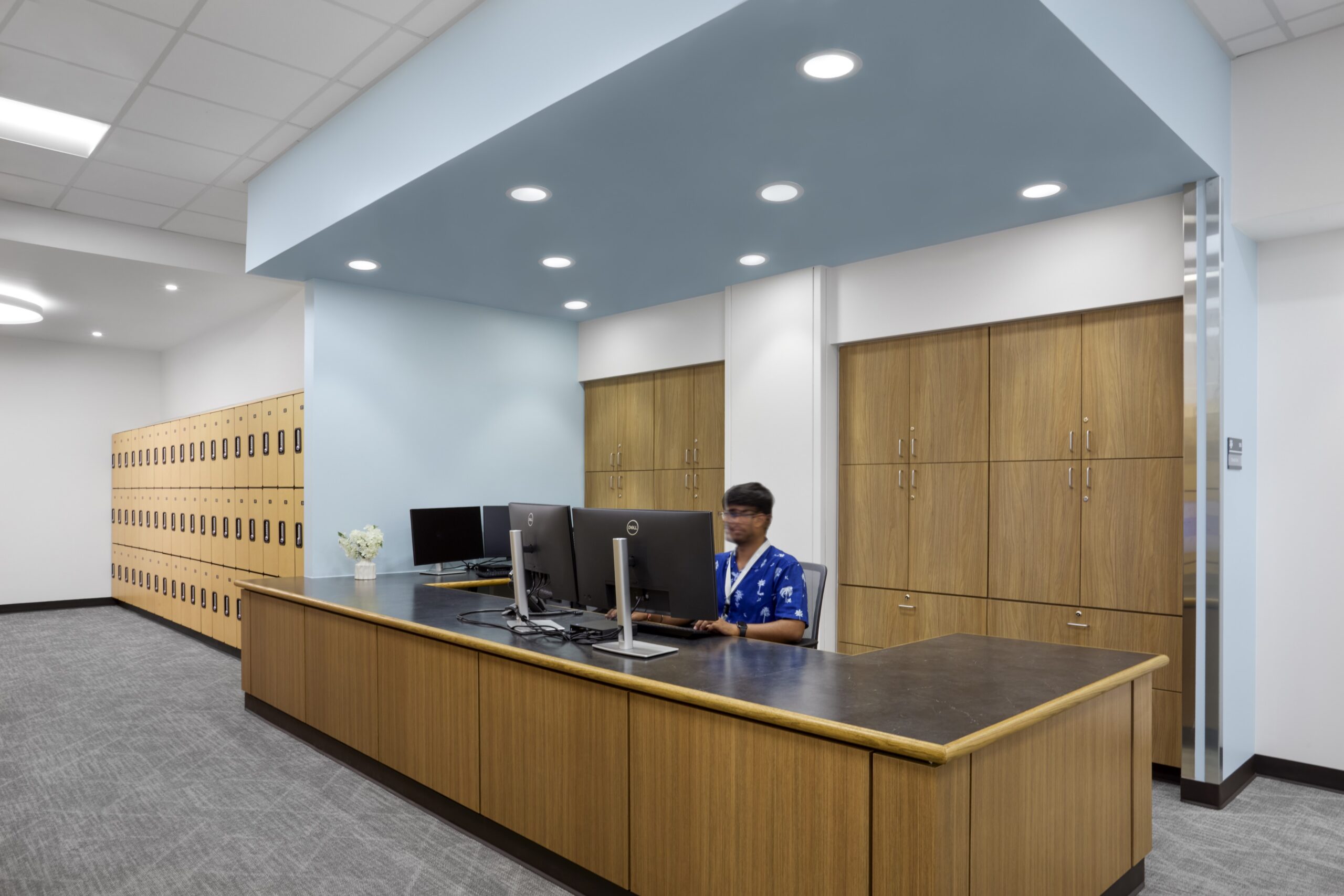
Wood grain patterning on the lockers, millwork, and strategically placed wall panels help to warm and soften the space while research into the impact of color on test performance drove the choice of three blue hues used as accents through the space. In the restrooms, introducing quartz counters and a touch-height band of smooth tile brings texture and tactile comfort into the design, providing touch points which feel especially soothing.
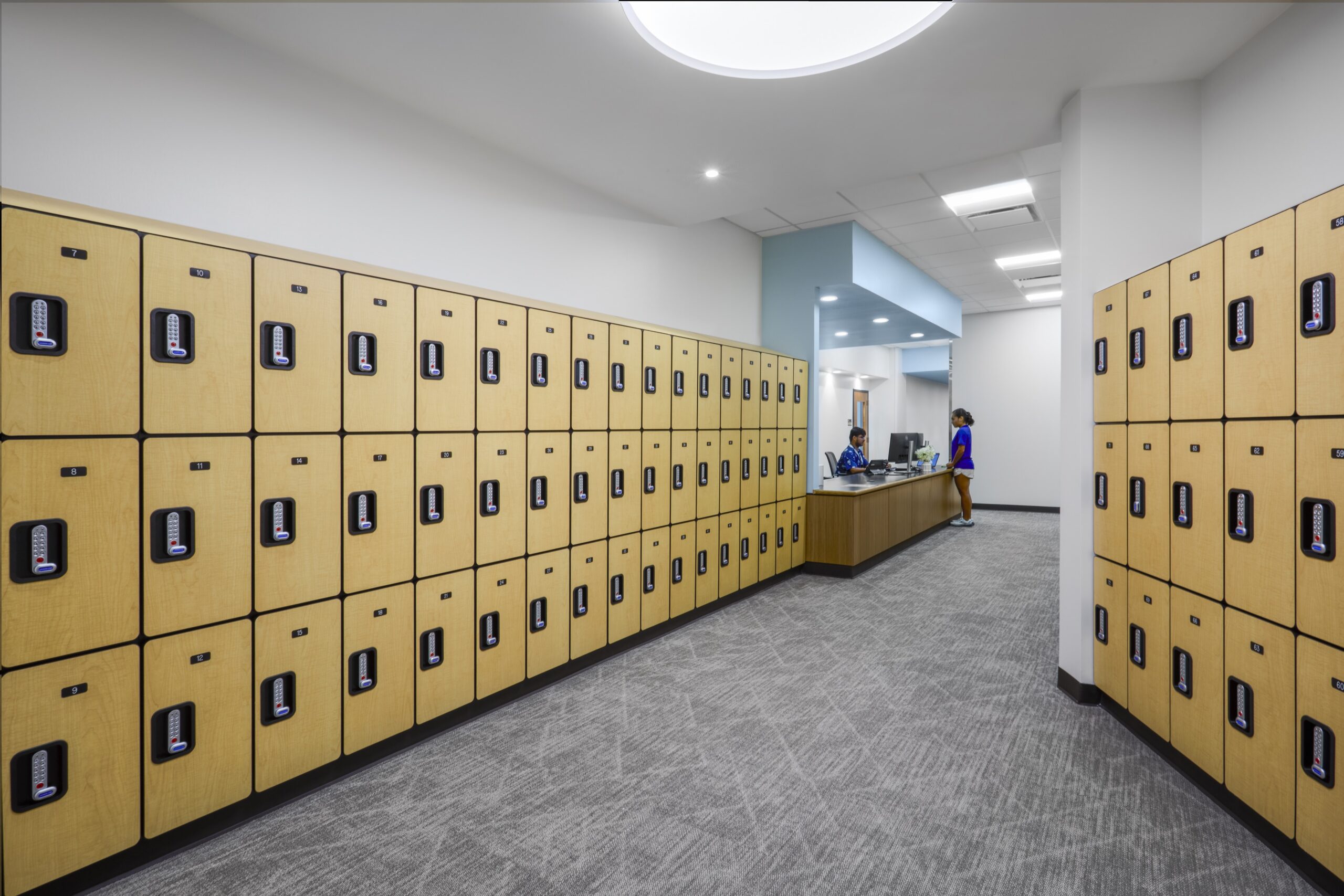
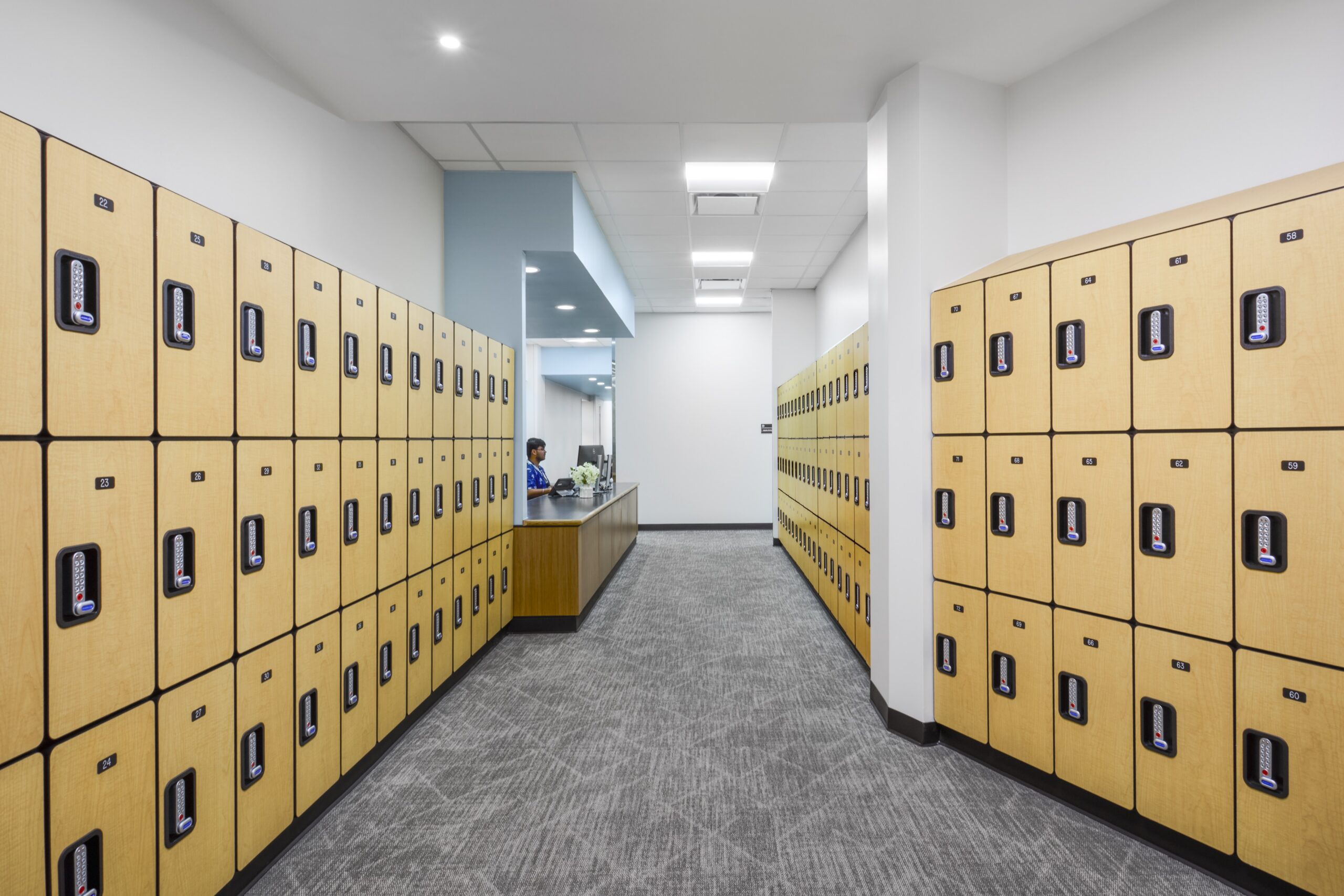
The new TAMU Disability Services Testing Center includes both a check-in and a check-out area with spacious lockers lining the walls, a troubleshooting window, 3 large testing rooms, 2 private testing rooms, 2 offices, staff work areas with a breakroom, and 2 accessible restrooms. The placement of the lockers between the entry/exit door and Check Out desk ensures students cannot access prohibited materials without being observed. The Check Out counter also has view of the private testing rooms and corridor to the restrooms. The Check In desk has visual oversite of the doors to the large testing rooms and all testing stations are monitored via cameras which feed to a bank of screens in the staff area. This design maximizes the number of testing stations needed while still providing enough security through both human and digital oversite to ensure the validity of testing results without compromising the well-being of students.
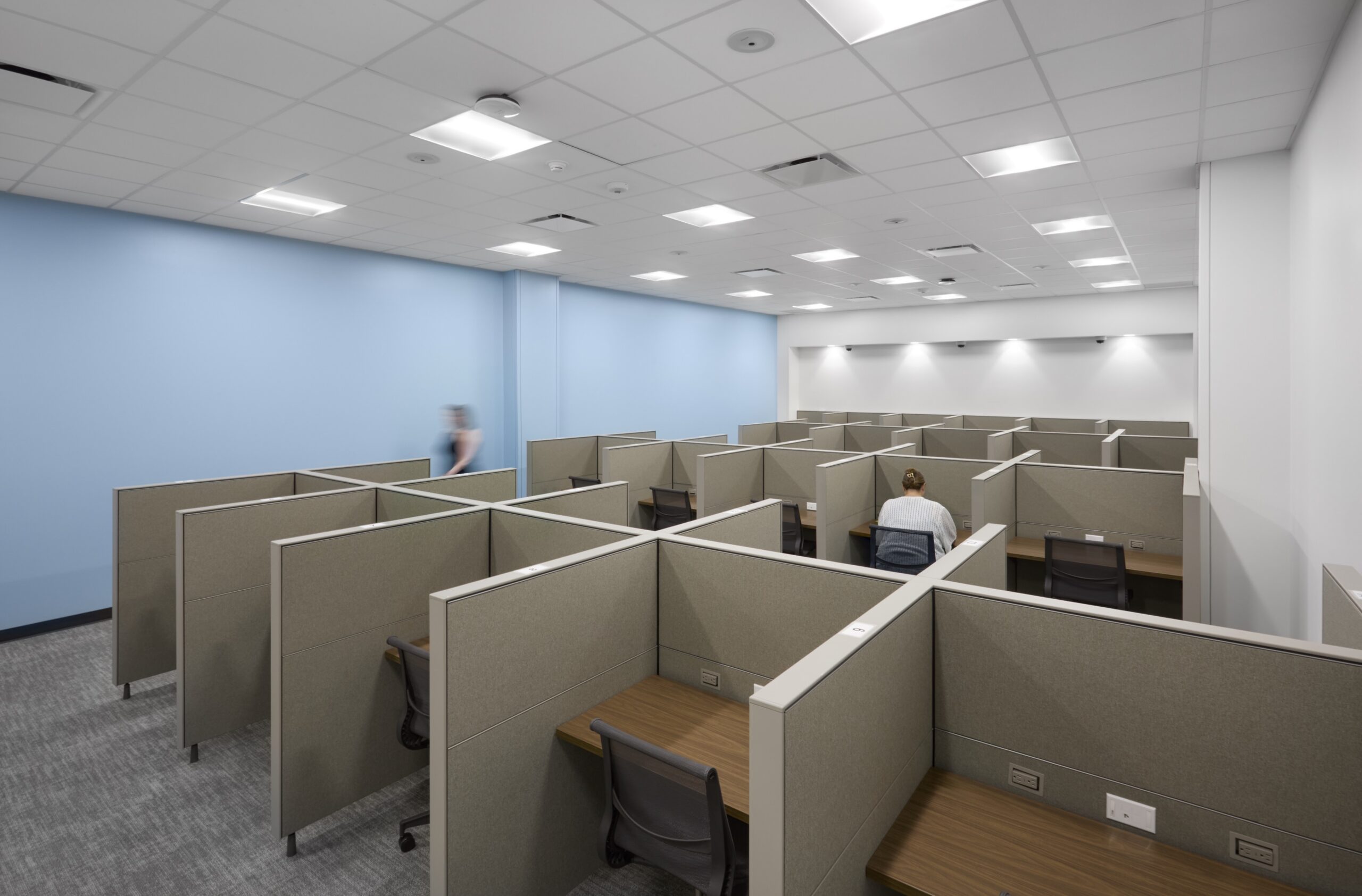
The new TAMU Disability Services Testing Center includes both a check-in and a check-out area with spacious lockers lining the walls, a troubleshooting window, 3 large testing rooms, 2 private testing rooms, 2 offices, staff work areas with a breakroom, and 2 accessible restrooms. The placement of the lockers between the entry/exit door and Check Out desk ensures students cannot access prohibited materials without being observed. The Check Out counter also has view of the private testing rooms and corridor to the restrooms. The Check In desk has visual oversite of the doors to the large testing rooms and all testing stations are monitored via cameras which feed to a bank of screens in the staff area. This design maximizes the number of testing stations needed while still providing enough security through both human and digital oversite to ensure the validity of testing results without compromising the well-being of students.